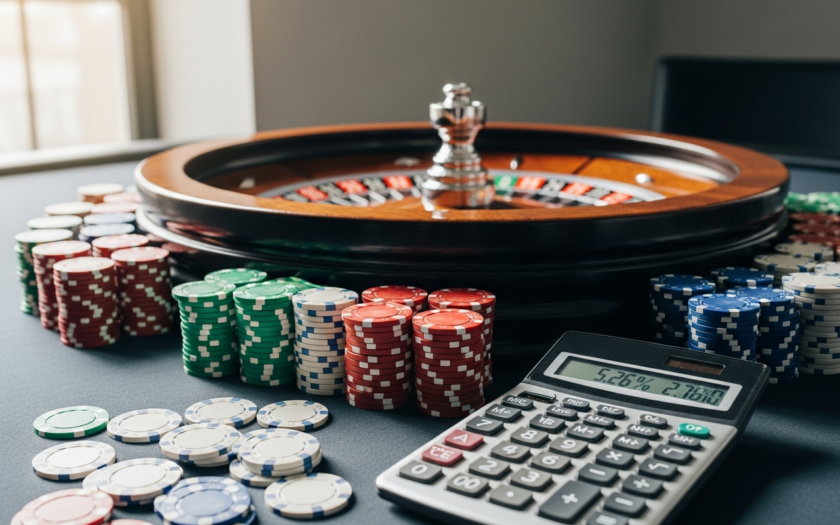
Understanding the house edge is essential for every Indian player who enjoys online roulette with real money. Simply put, the house edge is the casino’s long-term mathematical advantage over players, expressed as a percentage of all bets placed. For example, a house edge of 5.26% means the casino expects to keep ₹5.26 out of every ₹100 wagered over time. This built-in advantage ensures casinos remain profitable while offering entertainment to players.
In the Indian online gambling market, roulette comes in several popular variants—European, American, and French—each with different house edges ranging from 1.35% to 5.26% or higher. Indian players betting in INR need to understand that choosing the right wheel directly impacts how quickly their bankroll depletes. Grasping the house edge helps set realistic expectations, select games wisely, and avoid falling for myths about beating fixed-edge games. It’s not about guaranteed losses on every spin, but understanding the mathematical reality over hundreds or thousands of rounds.
What Is House Edge In Online Roulette?
The house edge represents the casino’s expected percentage profit from the total amount wagered by all players over time. If a roulette variant has a house edge of 5.26%, the casino theoretically retains ₹5.26 for every ₹100 bet across thousands of spins. This doesn’t mean you lose exactly that amount in a single session—short-term results vary widely—but the mathematical expectation favors the house in the long run.
Casinos build this edge by offering payouts that fall below the true mathematical odds of winning. For instance, European roulette features 37 numbered slots (0-36), but a winning single-number bet pays only 35:1 instead of the true 36:1 odds. This small discrepancy across all bet types creates a consistent house edge of approximately 2.7%. The same principle applies to American roulette with its additional double-zero, which increases the house advantage to 5.26%.
The concept of Return to Player (RTP) is directly related: RTP equals 100% minus the house edge. European roulette with a 2.7% house edge offers an RTP of 97.3%, meaning players theoretically receive ₹97.30 back for every ₹100 wagered over the long term. American roulette’s 5.26% edge yields a 94.74% RTP. It’s crucial to remember that house edge and RTP are long-run statistical measures—they don’t dictate results for individual sessions, but they define the game’s mathematical structure that operates over millions of spins.
How Casinos Build The Edge Into Roulette
The house advantage in roulette comes entirely from the presence of green zero pockets. In European roulette, the single zero (0) creates the edge; in American roulette, both zero (0) and double-zero (00) increase it further. When you look at the wheel, there are 18 red numbers, 18 black numbers, and one (or two) green zeros—this imbalance is where the casino’s profit originates.
Consider an even-money bet like red or black. You might assume the odds are 50/50, but they’re actually 18 out of 37 (approximately 48.6%) on a European wheel or 18 out of 38 (about 47.4%) on an American wheel. Despite these reduced probabilities, the casino pays you only 1:1 on winning even-money bets. This difference between true odds and payout odds is how the house edge manifests on every bet type, from single numbers to column bets.
House Edge vs Volatility For Indian Players
Many Indian players confuse house edge with volatility, but they measure different aspects of the game. House edge is the long-term average loss rate built into the game’s math, while volatility (or variance) describes the short-term fluctuations and swings in your bankroll from spin to spin. A game can have low house edge but high volatility, or vice versa.
Inside bets such as single-number wagers have much higher volatility than outside bets like red/black, because they hit less frequently but pay much more when they do (35:1 versus 1:1). However, both bet types carry the same house edge on a given wheel—2.7% on European, 5.26% on American. Understanding this helps Indian players choose betting styles that match their risk tolerance and session goals, without mistakenly thinking inside bets are “worse” due to their higher variance.
House Edge By Roulette Variant At Indian Online Casinos
Different roulette variants available at Indian-friendly online casinos carry dramatically different house edges, directly affecting how long your INR bankroll lasts. French roulette with the La Partage or En Prison rules offers the lowest edge at approximately 1.35% on even-money bets, making it the most player-friendly option. European roulette with a single zero sits at 2.7%, which is still quite reasonable for casino games.
American roulette, featuring both 0 and 00, jumps to a 5.26% house edge—nearly double that of European roulette. Some offshore casinos even offer Triple Zero roulette with a punishing 7.69% edge, which should be avoided by savvy Indian players. The table below compares these variants in detail, highlighting why wheel selection is one of the most important decisions you’ll make before placing your first INR bet.
| Roulette Variant | Zeros on Wheel | Typical House Edge | Approximate RTP | Notes for Indian Players |
|---|---|---|---|---|
| French Roulette (La Partage) | 1 (single zero) | 1.35% | 98.65% | Best value for even-money bets; widely available on premium Indian platforms |
| European Roulette | 1 (single zero) | 2.7% | 97.3% | Most popular format; excellent choice for regular INR play |
| American Roulette | 2 (0 and 00) | 5.26% | 94.74% | Avoid unless no European alternative; bankroll drains nearly twice as fast |
| Triple Zero Roulette | 3 (0, 00, 000) | 7.69% | 92.31% | Terrible for players; found on some offshore sites—always skip |
The difference between these edges might seem small in percentage terms, but over hundreds of spins, they translate into significantly different bankroll outcomes. Playing European roulette instead of American saves you approximately ₹256 in theoretical losses for every ₹10,000 wagered. For regular players who enjoy multiple sessions per week, this difference compounds rapidly, making variant selection a critical factor in bankroll longevity.
Why European & French Roulette Are Better For Indian Players
Single-zero wheels offer compelling advantages that directly benefit Indian players betting in INR. Understanding these benefits helps you make informed choices when browsing the game libraries of licensed online casinos serving the Indian market.
- Lowest house edge available: French roulette at 1.35% (with La Partage) and European at 2.7% offer the best mathematical value in roulette, extending playing time and reducing theoretical losses per session.
- Better RTP means more action: With 97.3%-98.65% RTP, more of your wagered INR circulates back into play, allowing longer sessions and more entertainment value for your rupee.
- Widely available on Indian-friendly platforms: Most reputable online casinos targeting Indian players feature multiple European and French roulette tables in both RNG and live dealer formats.
- Compatible with all betting systems: Lower house edges make progression systems and bankroll strategies more sustainable, even though they can’t overcome the mathematical advantage.
- Avoid Triple Zero roulette entirely: The 7.69% edge drains your bankroll at nearly three times the rate of European roulette—no bonus or promotion justifies this disadvantage.
How House Edge Is Calculated In Roulette
The house edge formula compares the true mathematical odds of winning a bet against the payout the casino actually offers. The difference, expressed as a percentage, represents the casino’s built-in advantage. For example, a single-number bet in European roulette has true odds of 36 to 1 (36 losing outcomes versus 1 winning outcome), but the casino pays only 35:1. This one-unit shortfall across 37 possible outcomes creates the 2.7% house edge.
The calculation becomes: [(36 – 35) ÷ 37] × 100 = 2.7%. In American roulette with 38 total pockets, the same 35:1 payout on a single number yields [(37 – 35) ÷ 38] × 100 = 5.26%. Every bet type on the roulette layout—whether corners, streets, dozens, or even-money wagers—inherits this same house edge because the payout structure is calibrated to maintain the casino’s advantage consistently across the board.
The table below illustrates how different bet types on different wheel formats all funnel into the same house edge, despite their varying payouts and probabilities. This uniform edge across bet types is unique to roulette and differs from games like craps, where different bets carry different house advantages.
| Example Bet | Wheel Type | True Odds of Winning | Payout Odds | Implied House Edge |
|---|---|---|---|---|
| Single Number (Straight Up) | European (37 slots) | 36 to 1 | 35:1 | 2.7% |
| Single Number (Straight Up) | American (38 slots) | 37 to 1 | 35:1 | 5.26% |
| Red/Black (Even Money) | European (37 slots) | 18/37 (48.6%) | 1:1 | 2.7% |
| Red/Black (Even Money) | American (38 slots) | 18/38 (47.4%) | 1:1 | 5.26% |
| Dozen Bet (12 numbers) | European (37 slots) | 12/37 (32.4%) | 2:1 | 2.7% |
Single-Number Bets: 35:1 Payout vs True Odds
The single-number (straight-up) bet is the cornerstone of understanding roulette’s house edge because it most clearly illustrates the gap between true odds and casino payouts. On a European wheel with 37 numbers, your true probability of hitting any single number is 1 in 37, which mathematically should pay 36:1 to be perfectly fair. Instead, the casino pays 35:1, keeping one unit of value for itself. Over 37 spins betting ₹100 on a single number each time, you’d wager ₹3,700 total. Statistically, you’d win once, receiving ₹3,600 (₹3,500 profit plus your ₹100 stake back), resulting in a net loss of ₹100—exactly 2.7% of your total wagers.
On an American wheel with 38 pockets, the same 35:1 payout applies, but now your true odds are 37 to 1. Betting ₹100 per spin across 38 spins costs ₹3,800, and your single expected win returns ₹3,600, for a ₹200 loss—which equals 5.26% of total wagers. This is why American roulette’s house edge is nearly double that of European roulette: the extra zero pocket reduces your win probability without any corresponding increase in payouts.
Even-Money Bets & La Partage On French Tables
French roulette introduces the La Partage rule, which dramatically reduces the house edge on even-money bets (red/black, odd/even, high/low) to approximately 1.35%. Under La Partage, when the ball lands on zero, players who made even-money wagers receive half their stake back instead of losing the entire bet. This effectively cuts the house edge in half for these specific bets, making French roulette the most favorable variant for players who prefer outside wagers.
Here’s how it works in INR terms: if you bet ₹1,000 on red and the ball lands on zero, you lose only ₹500 instead of the full ₹1,000. Over the long run, this rule adjustment reduces the casino’s mathematical advantage on these bets from 2.7% down to 1.35%. Some French tables offer an alternative called En Prison, where your even-money bet is “imprisoned” for another spin instead of losing half immediately—the mathematical result is identical. Indian players seeking maximum value should prioritize French roulette tables with La Partage when available at their chosen online casino.
House Edge In RNG vs Live Dealer Indian Online Roulette
A common misconception among Indian players is that RNG (random number generator) roulette and live dealer roulette have different house edges, or that one is “more fair” than the other. In reality, the house edge is determined entirely by the wheel design—the number of zeros and the payout structure—not by whether the game uses software or a physical wheel streamed via video.
Both formats offer the same mathematical probabilities when comparing equivalent variants. Understanding the differences helps you choose based on preference and playing style, not on mistaken beliefs about fairness or edge:
- House edge comes from wheel configuration: A European RNG roulette and a live European roulette both carry a 2.7% house edge because both use a 37-number wheel with identical payout structures.
- RNG roulette uses certified random generators: Licensed Indian-friendly platforms employ RNG software tested and certified by independent agencies like eCOGRA, iTech Labs, or GLI, ensuring truly random outcomes equivalent to physical wheels.
- Live dealer roulette streams real physical wheels: Live games broadcast from studios or land-based casinos, where you watch an actual ball spin on an actual wheel in real-time, eliminating any RNG altogether.
- Speed and convenience differ, not odds: RNG roulette allows faster play (up to 100+ spins per hour) and no waiting for other players, while live dealer provides social interaction and visual confirmation of physical results.
- Both formats are equally fair when licensed: Licensed casinos serving Indian players must meet strict regulatory standards for both RNG and live games, with regular third-party audits verifying fairness and RTP accuracy.
Licensing, RTP Display & Fairness Checks
Reputable online casinos catering to Indian players display RTP and house edge information directly within game screens or help sections. Before committing your INR bankroll, check the game rules or information tab to confirm you’re playing the variant you expect—European (2.7%), French (1.35% on even-money with La Partage), or American (5.26%). This transparency is a hallmark of licensed platforms.
Always choose casinos licensed by recognized gambling authorities such as the Malta Gaming Authority, UK Gambling Commission, or Curaçao eGaming. These regulators mandate regular fairness audits by independent testing laboratories that verify RNG integrity and published RTP percentages. Indian players should also verify KYC (Know Your Customer) processes are in place, as legitimate casinos require identity verification to prevent fraud and ensure responsible gambling protections. Avoid unlicensed operators, which may manipulate game outcomes or refuse withdrawals, regardless of the theoretical house edge.
Impact Of House Edge On Your Bankroll In INR
Understanding house edge in abstract percentages is useful, but seeing its concrete impact on your INR bankroll makes the concept immediately practical. The table below maps typical house edges to theoretical losses over time for common total wager amounts, helping Indian players visualize what different roulette variants cost in real rupee terms.
| Wheel Type | House Edge | Total Wagered (INR) | Theoretical Loss Over Time | Implied RTP |
|---|---|---|---|---|
| French (La Partage on even bets) | 1.35% | ₹10,000 | ₹135 | 98.65% |
| European | 2.7% | ₹10,000 | ₹270 | 97.3% |
| American | 5.26% | ₹10,000 | ₹526 | 94.74% |
| Triple Zero | 7.69% | ₹10,000 | ₹769 | 92.31% |
| European | 2.7% | ₹25,000 | ₹675 | 97.3% |
| American | 5.26% | ₹25,000 | ₹1,315 | 94.74% |
| European | 2.7% | ₹50,000 | ₹1,350 | 97.3% |
These figures represent total amounts wagered, not starting bankroll. If you start with ₹10,000 and make ₹500 bets until your bankroll is exhausted, you’ll actually cycle through far more than ₹10,000 in total wagers because winning bets return funds you can wager again. This is why the house edge is calculated on total action, not initial deposits. Over a long session on European roulette, a ₹10,000 starting bankroll might generate ₹40,000-50,000 in total bets through wins and losses, leading to theoretical losses around ₹1,080-1,350 before your bankroll depletes completely.
How Many Spins Does It Take For House Edge To Matter?
The house edge is a long-term statistical expectation that becomes increasingly accurate over thousands of spins. In short sessions of 50-100 spins, variance dominates and results can swing wildly in either direction—players can easily be up or down 20-30% regardless of the house edge. This is why some Indian players win in single sessions and mistakenly believe they’ve found a “hot” table or system.
However, as the sample size grows into hundreds and thousands of spins, variance averages out and results converge toward the mathematical expectation. Regular players who enjoy roulette multiple times per week will typically accumulate thousands of spins per month, at which point the house edge becomes clearly visible in their overall profit/loss statement. Casual players with infrequent sessions may never play enough volume for the theoretical edge to fully manifest, allowing positive variance to create the illusion of beating the game.
Short-Term Winning vs Long-Term Expectation
It’s entirely possible—and statistically normal—to finish ahead after a few hours or even several sessions of roulette play. Short-term variance means lucky streaks, hot numbers, or favorable runs on even-money bets can overcome the 2.7% or 5.26% edge in the near term. Indian players should understand that these wins are real and enjoyable, but they don’t indicate skill or a flaw in the house edge mathematics.
The key to responsible gambling is treating roulette as entertainment with a cost, not as a profit opportunity. Set realistic win goals and stop-loss limits before each session, and when you do win, consider withdrawing profits rather than reinvesting everything. Chasing losses by increasing bet sizes or playing longer sessions to “win back” what was lost is the fastest path to bankroll depletion. The house edge guarantees the casino profits over millions of collective spins across all players—individual short-term results don’t change this underlying mathematical reality.
Roulette Betting Systems Popular With Indian Players
Betting systems like Martingale, Fibonacci, D’Alembert, and Labouchère enjoy popularity among Indian roulette players seeking structure and perceived control over outcomes. These systems prescribe specific bet progressions—usually increasing stakes after losses or wins according to fixed patterns. The Martingale, for example, doubles your bet after every loss, theoretically ensuring you recover all previous losses plus a small profit when you eventually win.
While these systems can be entertaining and help manage bet sizing, it’s critical to understand they cannot and do not reduce the house edge or guarantee long-term profit. Each spin of the roulette wheel is an independent event with fixed probabilities that don’t change based on previous results. Betting systems manipulate stake sizes and sequences but cannot alter the fundamental mathematical disadvantage built into the payout structure.
- Martingale System: Double your bet after each loss on even-money bets; revert to base stake after a win. Requires large bankroll and often hits table limits during long losing streaks.
- Fibonacci System: Increase bets according to the Fibonacci sequence (1, 1, 2, 3, 5, 8…) after losses; step back two numbers after wins. Slower progression than Martingale but still vulnerable to extended losing runs.
- D’Alembert System: Increase bet by one unit after a loss and decrease by one unit after a win. More conservative than Martingale but still cannot overcome house edge mathematically.
- Labouchère System: Create a sequence of numbers representing desired profit; bet the sum of first and last numbers; cross off numbers after wins, add the bet amount after losses. Complex tracking required.
Why No System Can Beat A Fixed House Edge
Every spin of a roulette wheel is statistically independent—the ball has no memory of previous results, and probabilities remain constant regardless of what happened before. Whether you bet ₹100 or ₹10,000 on the next spin, whether it’s your first spin or your thousandth, the house edge stays exactly the same: 2.7% on European wheels, 5.26% on American wheels.
Betting systems can affect the volatility and distribution of your session results, sometimes creating more frequent small wins or occasional large wins at the cost of infrequent but devastating losses. However, the mathematical expectation—your average loss per rupee wagered—never changes. Think of systems as entertainment tools or personal betting disciplines, not as profit strategies. Indian players who enjoy the structure and excitement of systems should use them with full awareness of their limitations and always within strict bankroll limits designed for entertainment, not income generation.
Practical Strategies To Reduce The House Advantage
While you cannot eliminate the house edge in roulette, smart game selection and disciplined bankroll management significantly reduce its impact on your INR funds. The most effective approach combines choosing low-edge variants with responsible session planning and realistic expectations. Here are actionable strategies every Indian player should implement:
- Always choose European or French roulette over American: This single decision cuts your theoretical losses nearly in half, from 5.26% down to 2.7% or 1.35%, extending your playing time and improving entertainment value per rupee.
- Prioritize French tables with La Partage for even-money bets: The 1.35% edge on red/black, odd/even, and high/low bets is the lowest available in roulette, offering maximum value for outside bet strategies.
- Avoid Triple Zero and novelty roulette variants: Gimmick wheels with extra zeros or side bets typically carry house edges of 7.69% or higher—these drain bankrolls at unsustainable rates.
- Set strict session budgets in INR before you play: Decide how much you can afford to lose as entertainment cost, and never exceed that amount regardless of short-term results.
- Use smaller bet units relative to bankroll: Betting 1-2% of your total session bankroll per spin allows you to weather normal variance without going broke during temporary losing streaks.
- Take breaks and avoid emotional or stress-driven play: Playing while tired, upset, or chasing losses leads to poor decisions and faster bankroll depletion—stick to predetermined limits.
- Cash out profits and never reinvest entire winnings: When you finish a session ahead, withdraw at least half your profits to ensure you walk away with tangible gains rather than giving everything back.
Choosing Lower-Edge Games Over Higher-Edge Alternatives
The comparison below places roulette variants alongside other popular games available at Indian online casinos, helping you make informed decisions about where to allocate your entertainment budget based on house edge and gameplay style.
| Game/Variant | House Edge Range | Key Advantages | Key Drawbacks | Notes for Indian Players |
|---|---|---|---|---|
| Blackjack (basic strategy) | 0.5%–2% | Lowest house edge; skill-based decisions reduce edge further | Requires learning basic strategy; less social than roulette | Best overall value for serious players willing to learn optimal play |
| French Roulette (La Partage) | 1.35% | Best roulette variant; simple gameplay; no skill required | Edge only applies to even-money bets; less common than European | Seek out casinos offering this format for regular roulette play |
| European Roulette | 2.7% | Widely available; straightforward; no learning curve | Higher edge than French; purely luck-based | Excellent choice for casual players; standard at most Indian platforms |
| American Roulette | 5.26% | Familiar to some players from land casinos | Double the edge of European; poor value | Avoid unless no European alternative is available |
| Andar Bahar | 2%–10%+ | Popular Indian game; simple rules; fast-paced | Edge varies widely by platform and payout structure | Check specific rules and payouts; avoid high-edge side bets |
For Indian players who prioritize value and playing time, combining European or French roulette with occasional blackjack sessions offers the best balance of entertainment and mathematical value. Both games feature relatively low house edges and are widely available at licensed Indian-friendly online casinos with INR betting options.
Responsible Gambling For Indian Roulette Players
Responsible gambling practices are essential because the house edge guarantees that roulette is a negative expectation game—over time, players will lose more than they win. Implementing deposit limits, loss limits, and session time limits through your casino’s account settings helps prevent excessive losses and maintains gambling as entertainment rather than a financial problem.
Many licensed casinos serving Indian players offer cooling-off periods (temporary self-exclusion) and permanent self-exclusion options for those who feel their play is becoming problematic. Never gamble with money you need for essential expenses, avoid using credit cards or loans to fund play, and recognize warning signs like chasing losses, hiding gambling activity from family, or feeling distressed about betting outcomes. Understanding the house edge intellectually is the first step, but combining that knowledge with strict personal limits and awareness of responsible gambling resources ensures roulette remains an enjoyable pastime within the Indian legal and cultural context.
Indian Market Specifics: Payments, Regulation & Game Selection
The Indian online gambling market offers unique considerations regarding payments, legal frameworks, and platform selection that directly impact your roulette experience. Most reputable international online casinos serving Indian players accept INR deposits and withdrawals through popular local payment methods including UPI (Unified Payments Interface), NetBanking, Paytm, PhonePe, Google Pay, credit/debit cards (Visa, Mastercard, RuPay), and e-wallets like Skrill and Neteller. Choosing platforms with native INR support eliminates currency conversion fees and simplifies bankroll management.
India’s legal landscape for online gambling remains complex and varies by state, with some states prohibiting games of chance while others permit them. Most Indian players access offshore-licensed online casinos operating under jurisdictions like Curaçao, Malta, or the UK. While these platforms are not explicitly legal under Indian law, they are also not explicitly prosecuted, creating a grey area. Players should prioritize platforms with strong international licensing, established reputations, transparent terms and conditions, and proven withdrawal track records. Look for casinos that display licensing information prominently, offer customer support in Hindi or English, and maintain positive reviews from the Indian player community.
Game selection at Indian-friendly casinos typically includes multiple roulette variants from leading providers like Evolution Gaming, Ezugi, and Pragmatic Play for live dealer games, plus RNG titles from NetEnt, Microgaming, and Playtech. Ensure your chosen platform offers European or French roulette in both live and RNG formats, allowing you to select the variant with the lowest house edge regardless of your preferred playing style.
Building A Smart Roulette Session Plan In India
A structured session plan helps Indian players minimize the impact of the house edge by combining smart variant selection with disciplined bankroll management. Follow these steps before and during each roulette session to maximize entertainment value while protecting your INR funds:
- Select a licensed, reputable casino with INR support: Verify the platform holds valid licensing from recognized authorities, offers European or French roulette, and accepts your preferred Indian payment methods with reasonable withdrawal times.
- Choose the lowest house edge variant available: Prioritize French roulette with La Partage (1.35%) if available, otherwise European roulette (2.7%)—never play American roulette (5.26%) or Triple Zero (7.69%) when better options exist.
- Set a fixed session budget and bet sizing: Decide your maximum loss limit for the session (e.g., ₹2,000) and calculate unit sizes at 1-2% of that budget (₹20-40 per spin), allowing 50-100 spins before potential depletion.
- Establish win goals and stop-loss triggers: Decide in advance when you’ll stop—for example, quit if you lose your full budget or if you’re up 50% (₹1,000 profit on a ₹2,000 budget), whichever comes first.
- Track time and take regular breaks: Set a session duration limit (60-90 minutes) and take a 10-minute break every 30 minutes to maintain clear decision-making and avoid fatigue-driven mistakes.
- Record results and learn from patterns: Maintain a simple log of session outcomes to understand your actual results versus theoretical expectations, helping you recognize when short-term variance masks long-term house edge.
- Withdraw winnings promptly: When you finish ahead, immediately withdraw at least half your profits to your bank account or e-wallet—don’t leave winnings sitting in your casino account where they might be re-wagered impulsively.